
420kW Grid-tied PV System - Industrial
- Type
- Industrial
- Location
- Caloocan
- System size
- 466 kWp
- Scope
- Redesigning, Installation & Commissioning

Engineering Scale:
The 466.2 kWp Commercial Solar Rooftop Installation
High atop the expansive metal roof deck of the industrial complex, JFL Solar engineered and deployed a high-capacity, grid-tied photovoltaic system designed to transform idle roof space into a high-yield clean energy power plant. Built to offset heavy industrial electrical loads, the project balances raw power output with meticulous mechanical layout and thermal optimization.
The Harnessing of Solar Generation
At the core of the roof-mounted array are 740 high-efficiency 630W bifacial solar panels, combining for a total peak DC generation capacity of 466.2 kWp. Built with a durable dual-glass architecture, these modules harvest direct sunlight across their front surface while simultaneously capturing scattered ambient light—the roof's albedo—reflected off the underlying metal deck onto the rear side of the panels. This dual-surface absorption delivers a continuous bonus yield over traditional monofacial arrays.
To handle the immense power generated on the roof, the DC array is tied directly into a decentralized inversion network consisting of seven 60 kW three-phase, low-voltage grid-tied string inverters. Combined, these units deliver a continuous nominal output of 420 kW AC to the facility’s main distribution board.
The system was intentionally designed with a 1.11 DC-to-AC oversizing ratio (111% loading). This sweet spot ensures the inverters operate at peak capacity for longer windows during early morning, late afternoon, and overcast conditions, without compromising thermal performance or clipping energy during mid-day generation peaks.
Mechanical Precision & Roof Integration
Installing a commercial array of this magnitude required meticulous layout planning and structural respect for the existing building envelope:
- Aerodynamic & Load-Balanced Mounting: Modules were anchored flush and parallel to the pitch of the metal roof profile. This ensures an even dead-load distribution across the structural purlins while maintaining a low wind drag coefficient to resist high wind uplift forces during severe weather.
- Shade Mitigation Around Obstructions: Rather than packing every available square meter, custom setback clearances were planned around the roof’s existing turbine ventilators and structural penetrations. This precise spatial spacing eliminates partial shading risks across the PV string configurations, safeguarding overall system efficiency and preventing hot-spot degradation.
- Heavy-Duty Balance of System (BOS):
To withstand continuous outdoor exposure, all DC string cabling utilizes UV-resistant, flame-retardant single-core solar wire. The cabling is neatly organized and suspended on elevated cable trays off the roof deck—protecting the conductors from standing water, thermal wear, and long-term mechanical friction.
Operational Impact
With commissioning complete, the 466.2 kWp system now acts as a dedicated on-site power station for the commercial facility. By automatically feeding clean solar power directly into the internal three-phase grid during operating hours, it dramatically reduces incoming utility power demand, lowers operational overhead, and secures a predictable energy footprint for years to come.
Photos
-
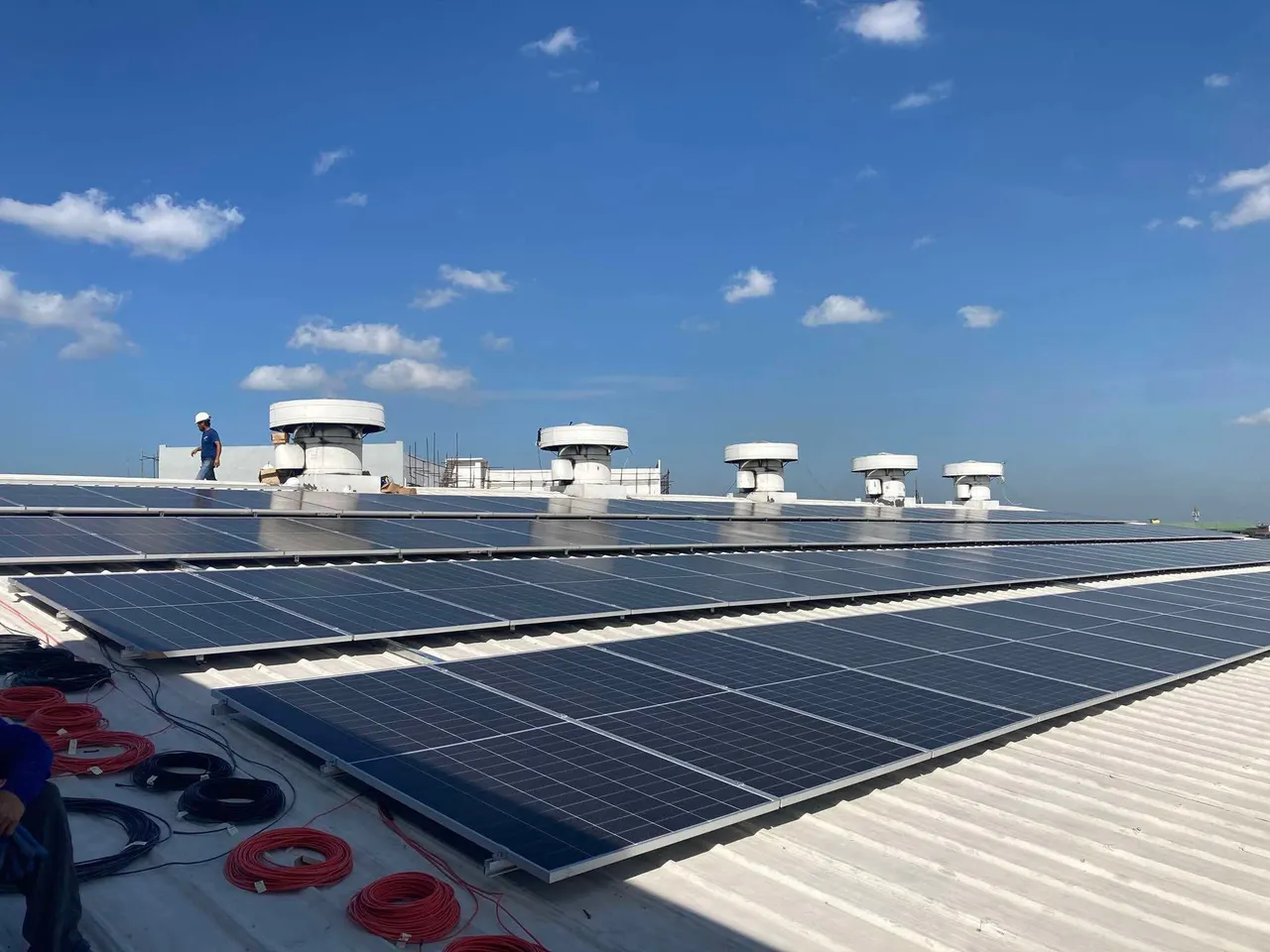
The modules are mounted flush and parallel to the metal roof, which spreads the weight evenly over the purlins -
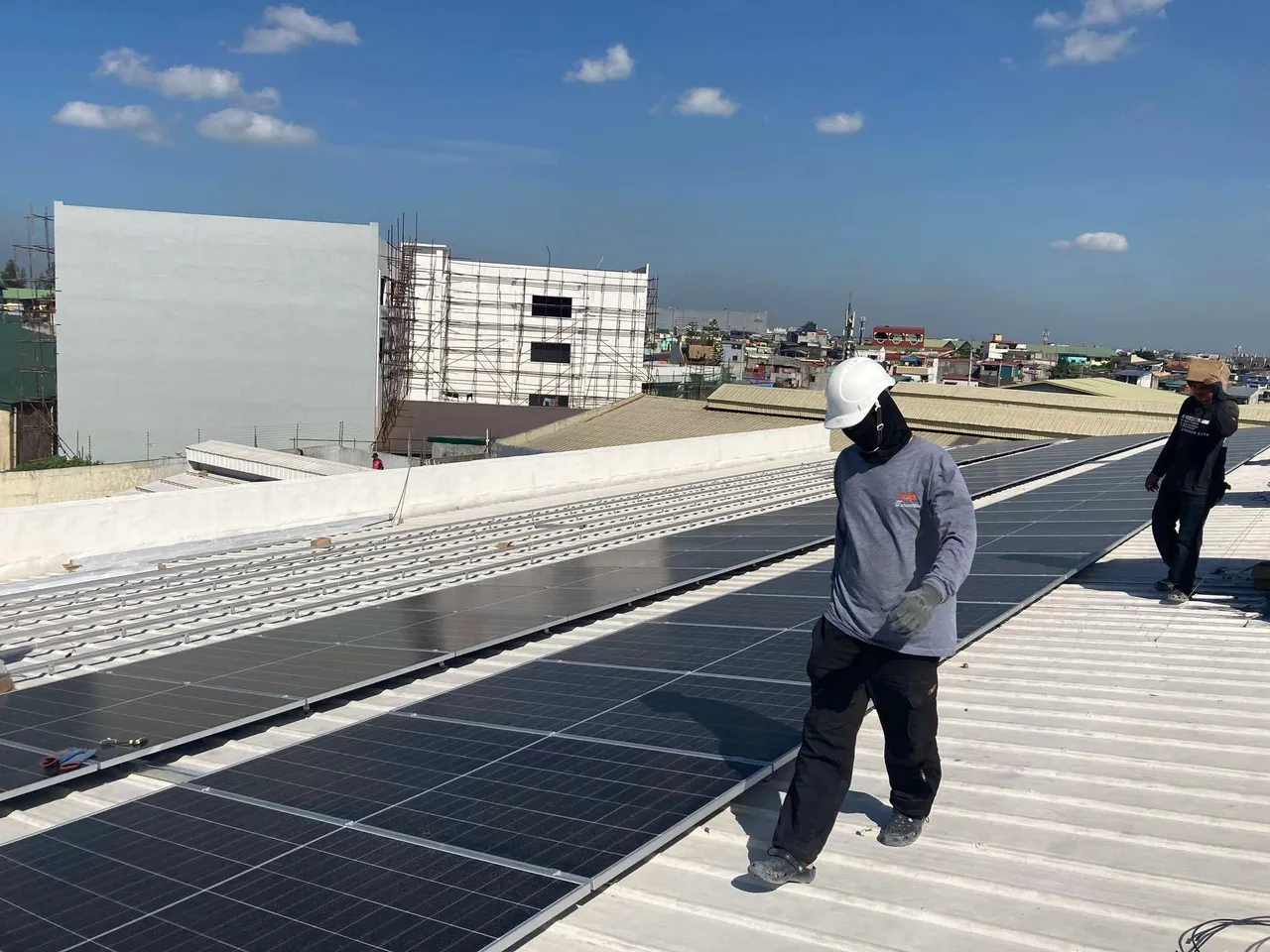
Inspecting the array: the layout leaves walkways for safe maintenance -

A long, straight row of bifacial modules across the industrial roof -
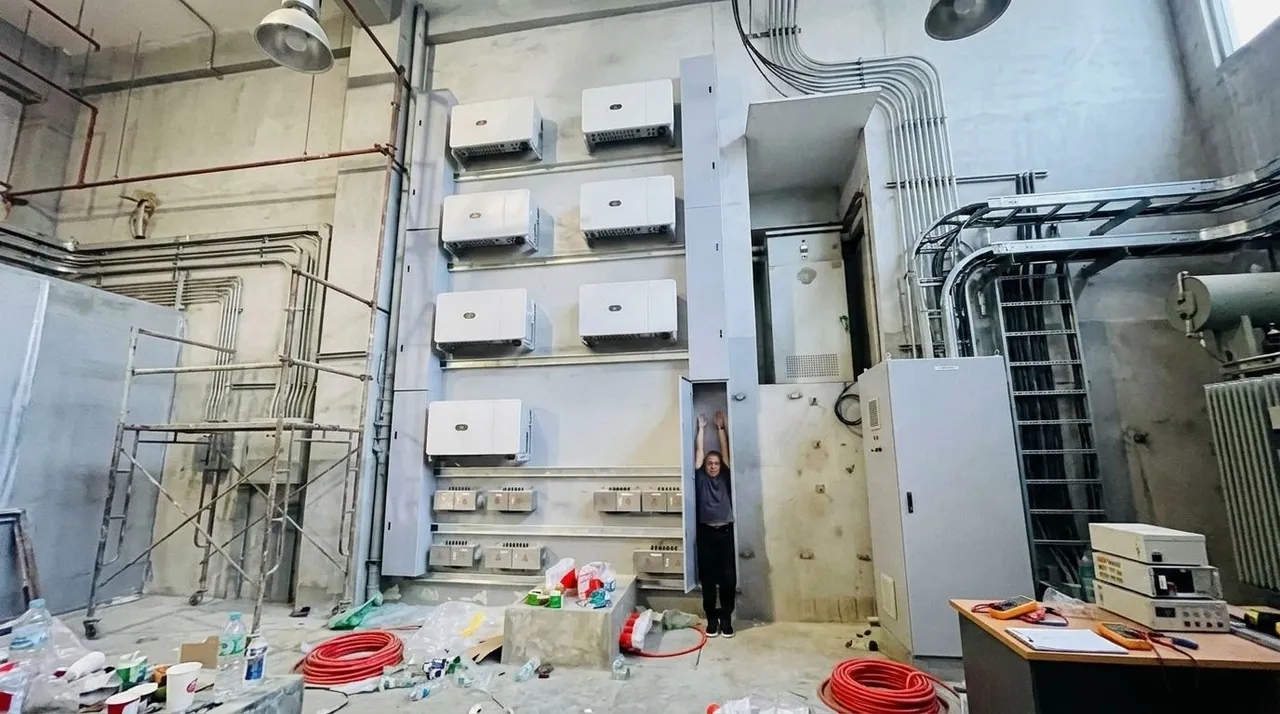
Inside the electrical room: seven 60 kW three-phase string inverters, 420 kW AC in total, during installation -
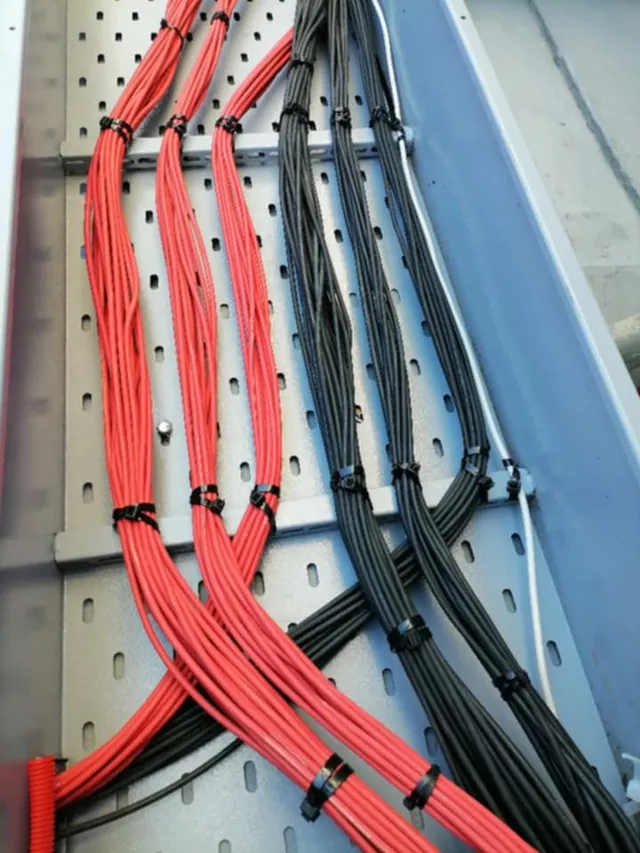
Neatly bundled and tied DC cables, red for positive and black for negative -
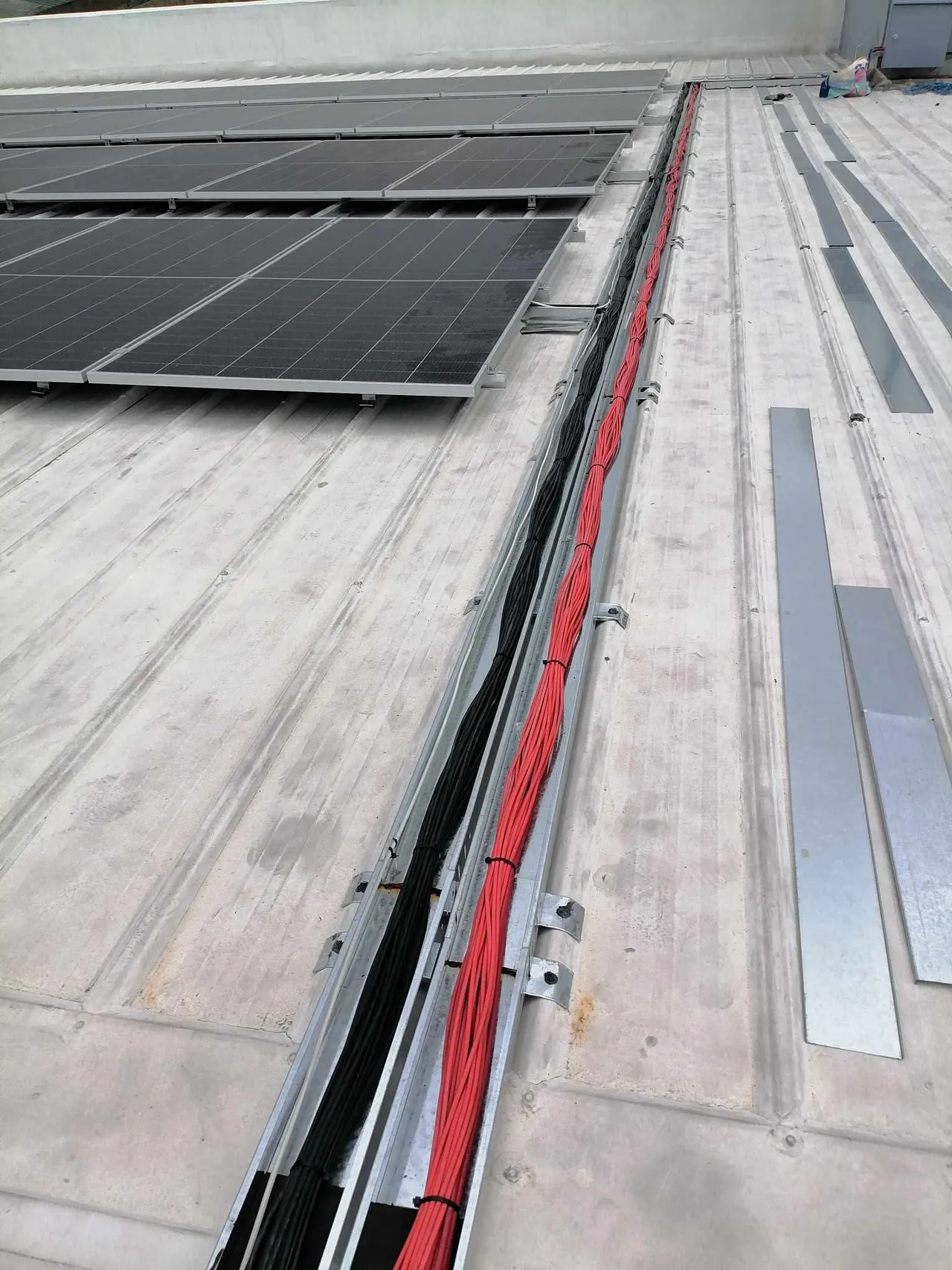
DC cables run along the roof between the rows, routed and secured clear of the roof surface -
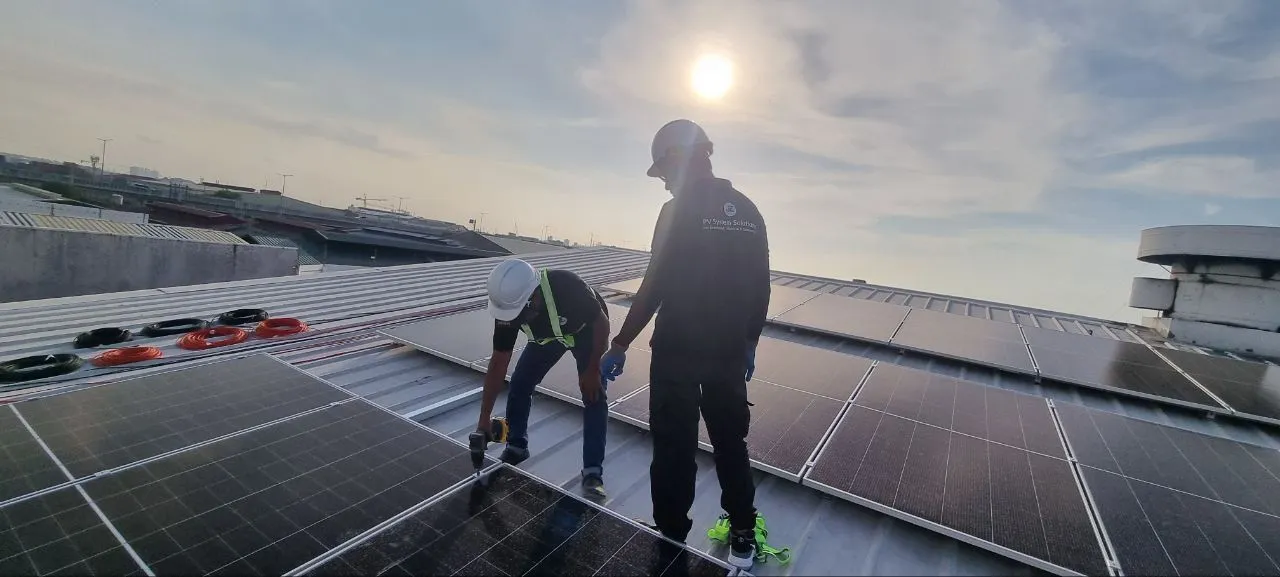
The team at work early in the morning, before the roof gets too hot -
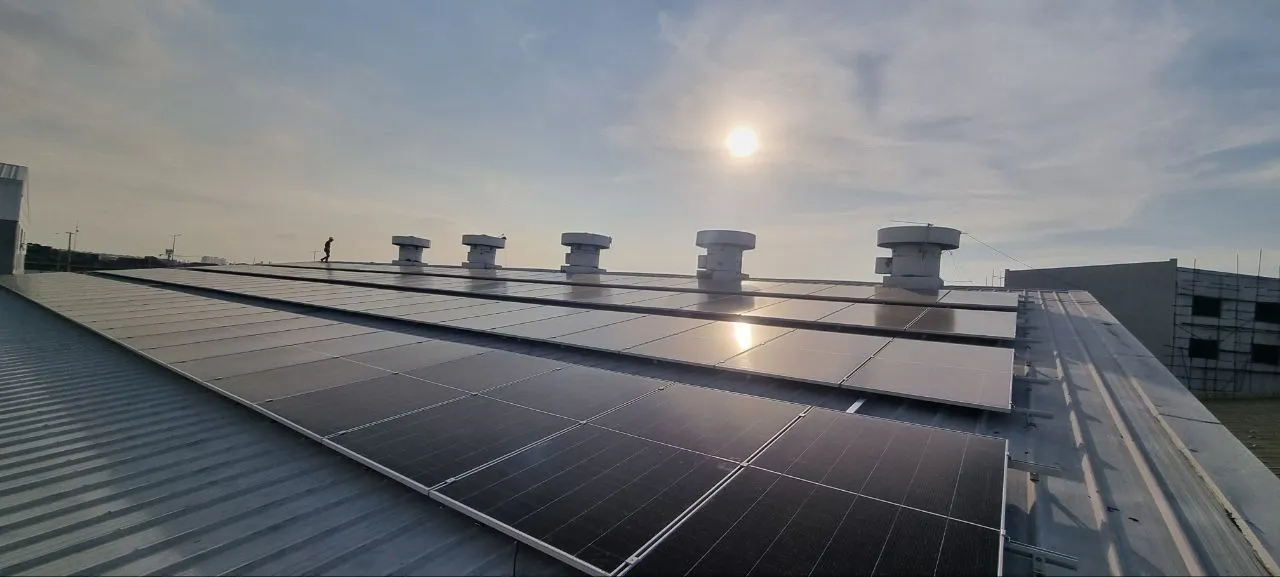
The finished array catching the morning sun -
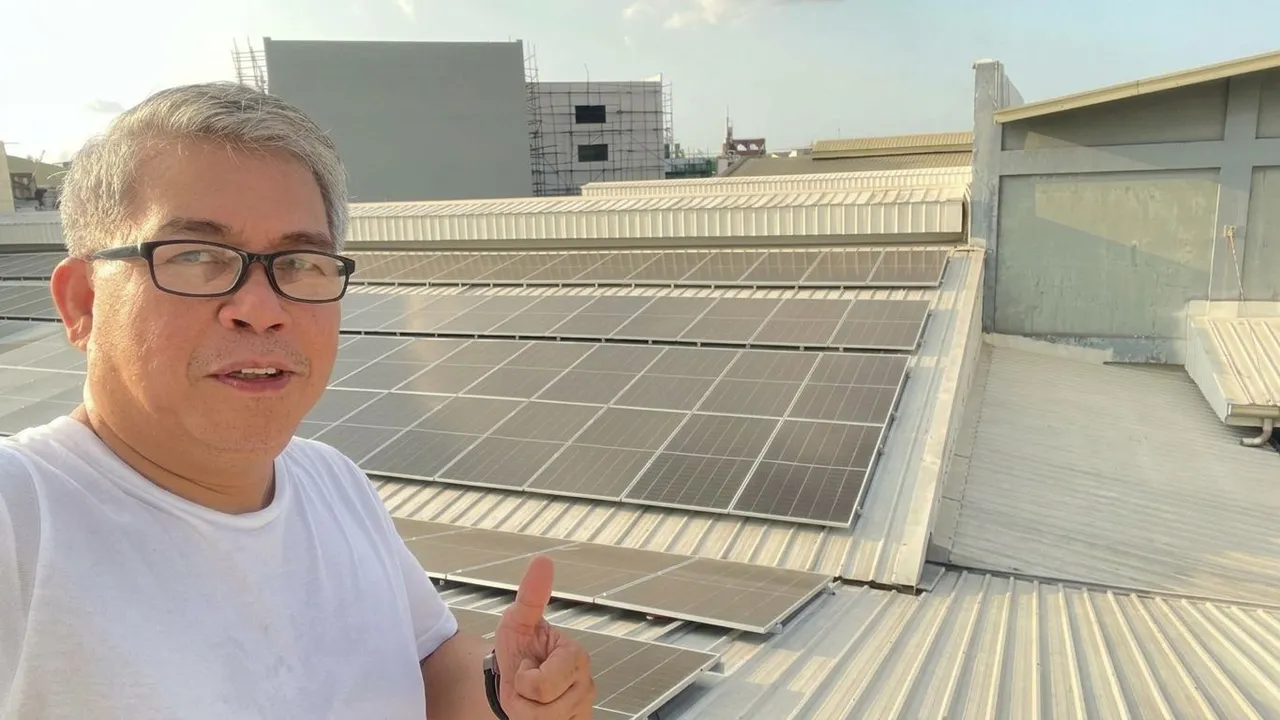
JF Legaspi on the roof with the finished array behind him
