
160kWp Grid-tied PV System - Industriyal, Denmark
- Uri
- Industriyal
- Lokasyon
- Denmark, Europe (exact site kept private)
- Laki ng sistema
- 160.36 kWp
- Saklaw ng trabaho
- Design & Project Management by JF Legaspi
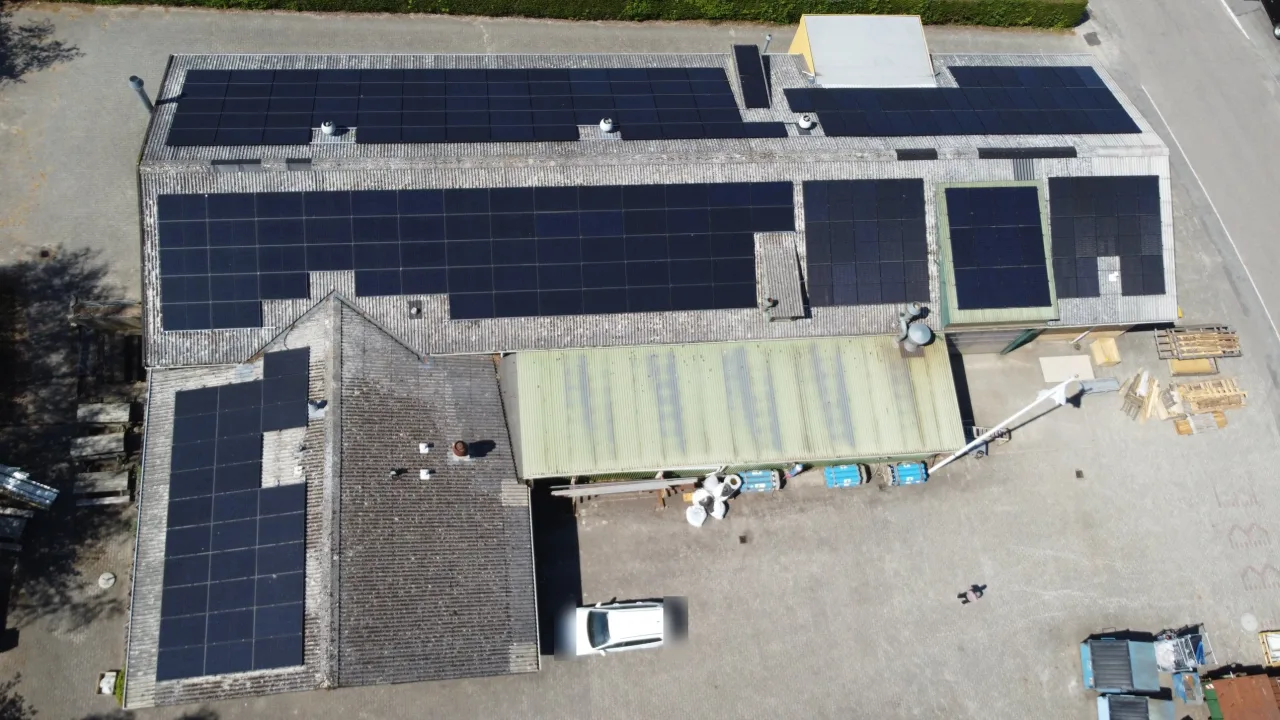
Si JF Legaspi ang nagdisenyo at namahala sa commercial at industrial solar PV system na ito sa Denmark, noong siya ay CTO ng isang European B2B solar company. Sakop nito ang mga bubong ng ilang gusali sa iisang industrial complex.
Hindi namin isinasapubliko ang pangalan ng kliyente at ang eksaktong lokasyon, bilang paggalang sa kanilang privacy.
Pangkalahatang-tanaw ng Proyekto
- Uri: grid-tied solar PV system para sa self-consumption, sa mga bubong ng ilang industrial building
- PV capacity: 160.36 kWp (422 modules, 768.8 m² na module area)
- Inverter capacity: 135 kW AC (3 × 40 kW + 1 × 15 kW), kabuuang DC/AC ratio na humigit-kumulang 119%
- Grid: three-phase, 230 V phase-to-neutral (400 V sa pagitan ng mga phase)
- Design software: PV*SOL premium, 3D model na may Meteonorm 8.1 climate data
Ang Site at ang Gamit Nito sa Kuryente
Humigit-kumulang 950,000 kWh ng kuryente ang ginagamit ng complex bawat taon, na may peak load na 108.5 kW. Mas malaki ito nang husto kaysa sa kayang gawin ng mga bubong, kaya ginamit ang bawat bubong na pwedeng lagyan, at halos walang kuryenteng naipapadala sa grid.
Mga PV Module
422 × Eurener MEPV 120 380W HC 9BB, monocrystalline half-cell modules:
- Efficiency: 20.87%; 120 half cells, 9 busbars, 3 bypass diodes
- Sa STC: Vmpp 34.47 V, Impp 11.03 A, Voc 41.7 V, Isc 11.55 A
- Temperature coefficient ng Pmpp: −0.37%/K
- Maximum system voltage: 1500 V
Siyam na Roof Surface
Iba-iba ang uri, tilt at direksyon ng mga bubong, kaya ginawang siyam na hiwalay na module surface ang array sa model:
- Main hall, silangang panig: 68 modules sa 15° at 103 modules sa 20°, nakaharap sa 97° (silangan)
- Main hall, kanlurang panig: 64 modules sa 15°, nakaharap sa 277° (kanluran)
- Pangalawang malaking gusali, kanlurang panig: 102 modules sa 20°, nakaharap sa 277°
- Bubong na nakaharap sa timog: 29 modules sa 17°, nakaharap sa 187°
- Mas maliliit na bubong: 24 modules sa 7° at 16 modules sa 20°, nakaharap sa kanluran
- Patag na bubong: 8 + 8 modules sa east-west layout na 10°
Karamihan ng module ay nakakabit nang parallel sa bubong na may hangin sa likod; racked east-west system naman ang gamit sa maliit na patag na bubong. 1.3% lang ang simulated na bawas dahil sa lilim.
Mga Inverter at String Design
Apat na Solis string inverter, bawat isa ay itinugma sa isang grupo ng roof surface:
- Inverter 1, Solis-40K-5G: silangan at kanluran ng main hall, 132 modules (50.16 kWp, DC/AC 125.4%); mga string sa silangan sa MPP tracker 1–2 (2 × 17 modules bawat isa), mga string sa kanluran sa MPP tracker 3–4 (2 × 16 modules bawat isa)
- Inverter 2, Solis-40K-5G: silangan ng main hall at ang bubong sa timog, 132 modules (50.16 kWp, DC/AC 125.4%); bawat MPP tracker ay may mga string mula sa iisang direksyon ng bubong
- Inverter 3, Solis-40K-5G: kanlurang bubong ng pangalawang gusali, 102 modules (38.76 kWp, DC/AC 96.9%); 2 × 12 at 3 × (2 × 13) na string
- Inverter 4, Solis S5-GR3P15K (15 kW, 2 MPP tracker): ang mas maliliit na bubong, 56 modules (21.28 kWp, DC/AC 141.9%)
Ang Solis-40K-5G ay may 4 na MPP tracker, 8 DC input, maximum input na 1100 V at MPP range na 200–1000 V.
- Halimbawa, 17-module na string sa STC: Vmpp humigit-kumulang 586 V at Voc humigit-kumulang 709 V, pasok na pasok sa MPP range at mas mababa sa 1100 V na limit
- Current bawat MPP tracker: 2 × 11.03 A = 22.06 A (limit 26 A); short-circuit current 23.1 A (limit 40 A)
Dahil may sariling MPP tracker ang silangan, kanluran at timog na bubong, gumagana ang bawat direksyon sa sarili nitong pinakamainam na voltage, kaya hindi nahihila pababa ng bubong na nasa lilim o nakatalikod sa araw ang iba.
Simulated Performance (PV*SOL)
- Taunang produksyon: 134,716 kWh (AC)
- Specific yield: 839.47 kWh/kWp bawat taon
- Performance ratio: 87.53%
- Nagamit sa site: 134,562 kWh bawat taon
- Ipinadala sa grid: 153 kWh lang bawat taon
- Self-consumption share: 99.9%
- Self-sufficiency: 14.2% ng gamit ng complex
- Bawas sa CO₂: humigit-kumulang 29,481 kg bawat taon
Resulta sa Pananalapi
- Internal rate of return (IRR): 17.70%
- Payback period: 5.6 taon
- Levelised cost of electricity: 0.7409 DKK/kWh
Ano ang Ipinapakita ng Proyektong Ito
Kapag maraming bubong ang isang site, nasa detalye ang tunay na trabaho sa disenyo: hiwalay na model para sa bawat roof surface, sariling MPP tracker para sa bawat direksyon, at bawat string na sinukat laban sa mga limit ng inverter. Makikita sa pahinang ito ang mga drone photo ng natapos na sistema at isang larawan mula sa araw ng installation.
Mga Larawan
-
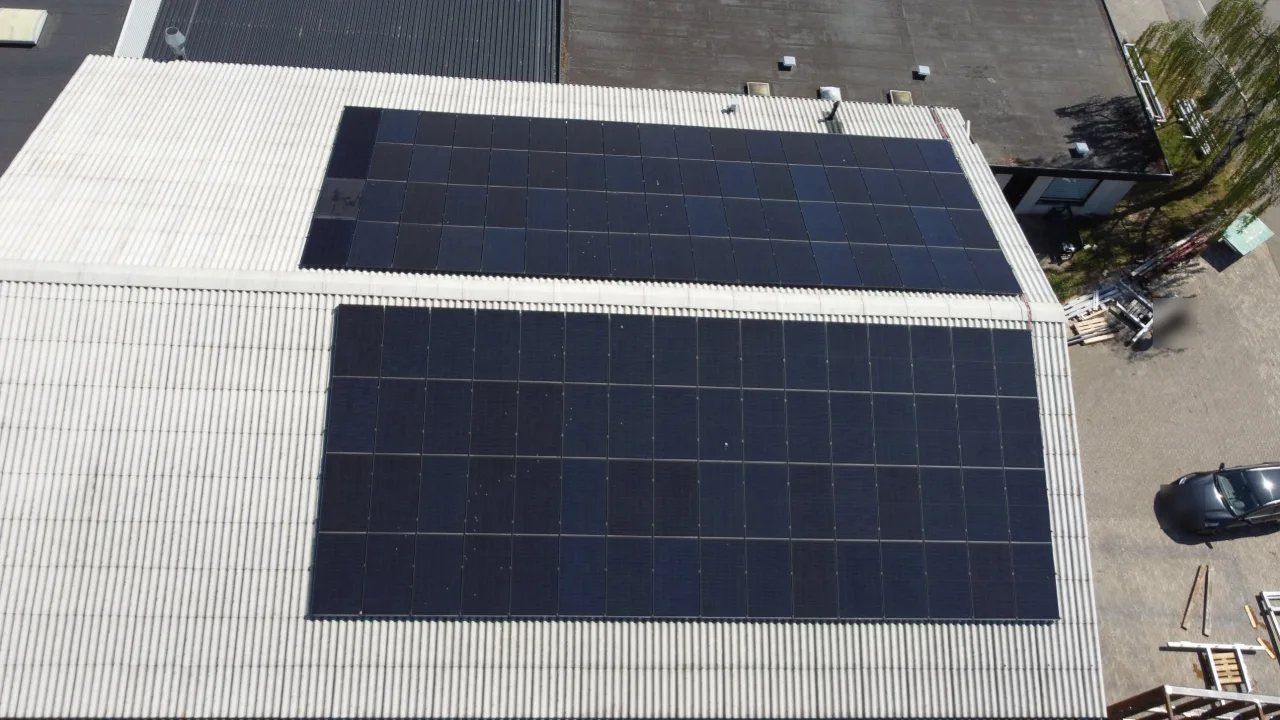
One section of the 160.36 kWp system: two large arrays on the east and west sides of the corrugated roof -
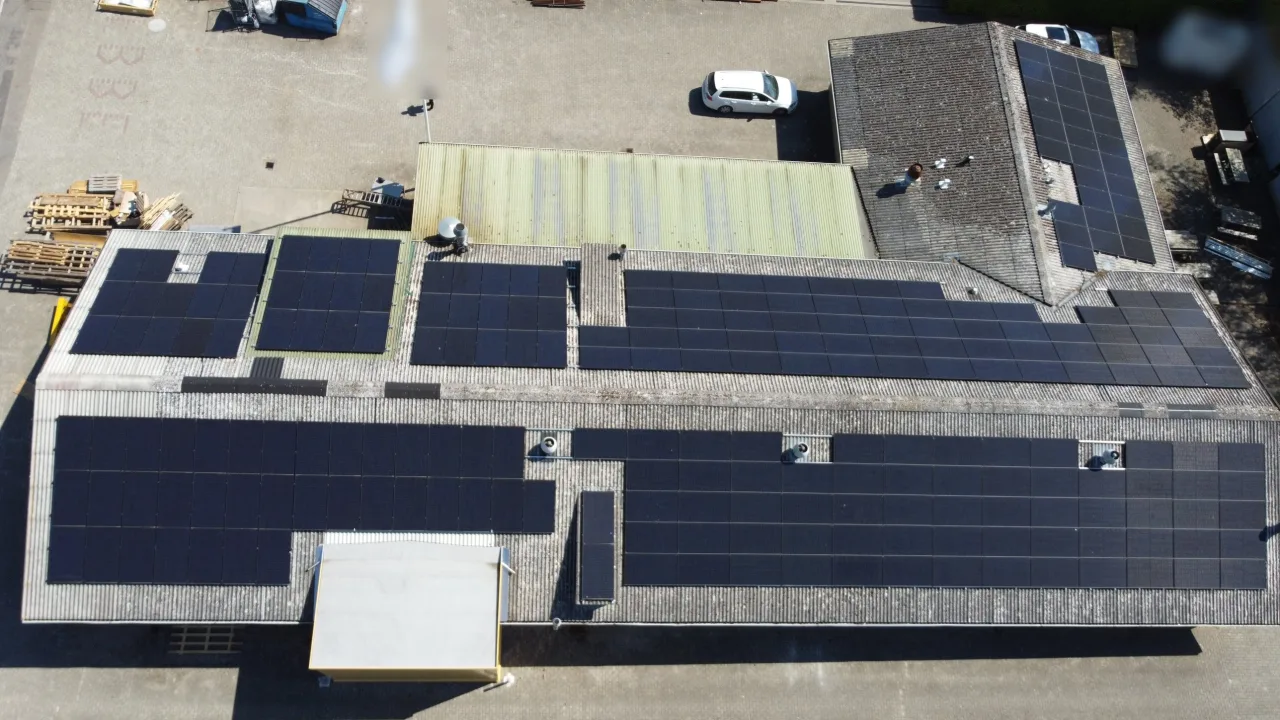
On the main hall, the module rows are fitted between the roof vents -
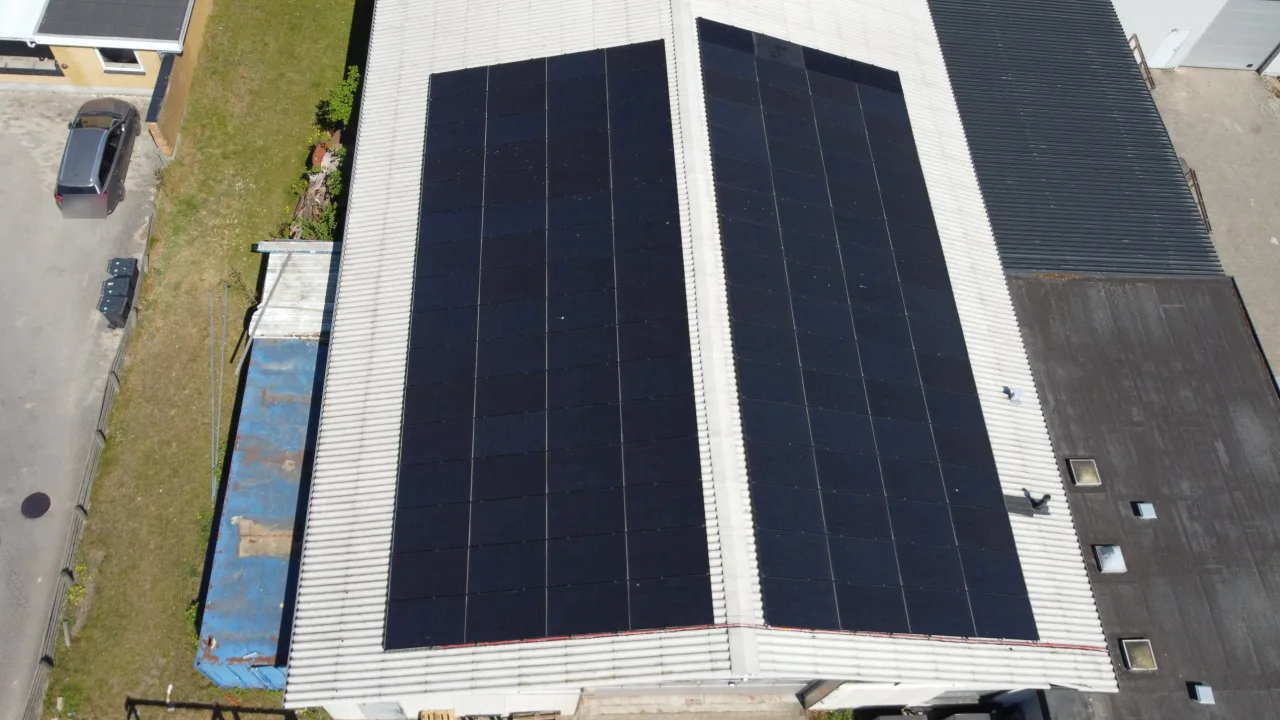
On the second building, two large arrays run parallel to the corrugated roof -
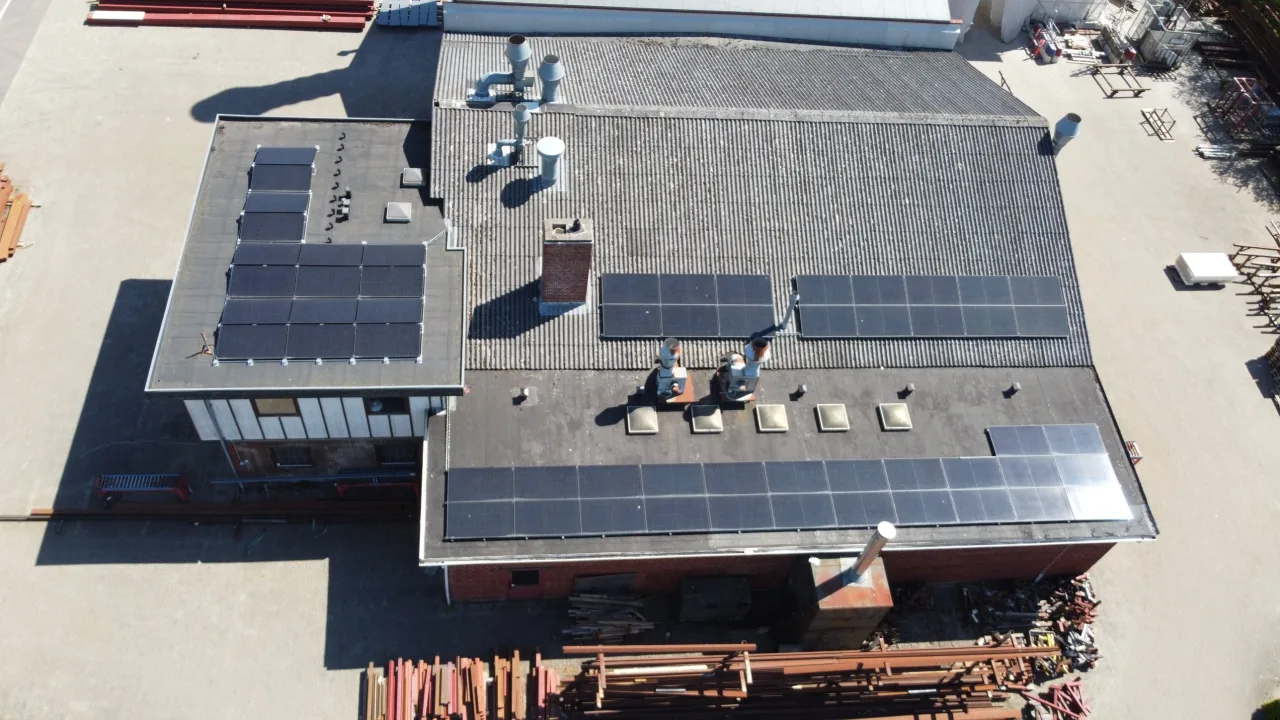
Different roofs, different mounting: flush on the corrugated roofs, racked rows on the flat roofs -
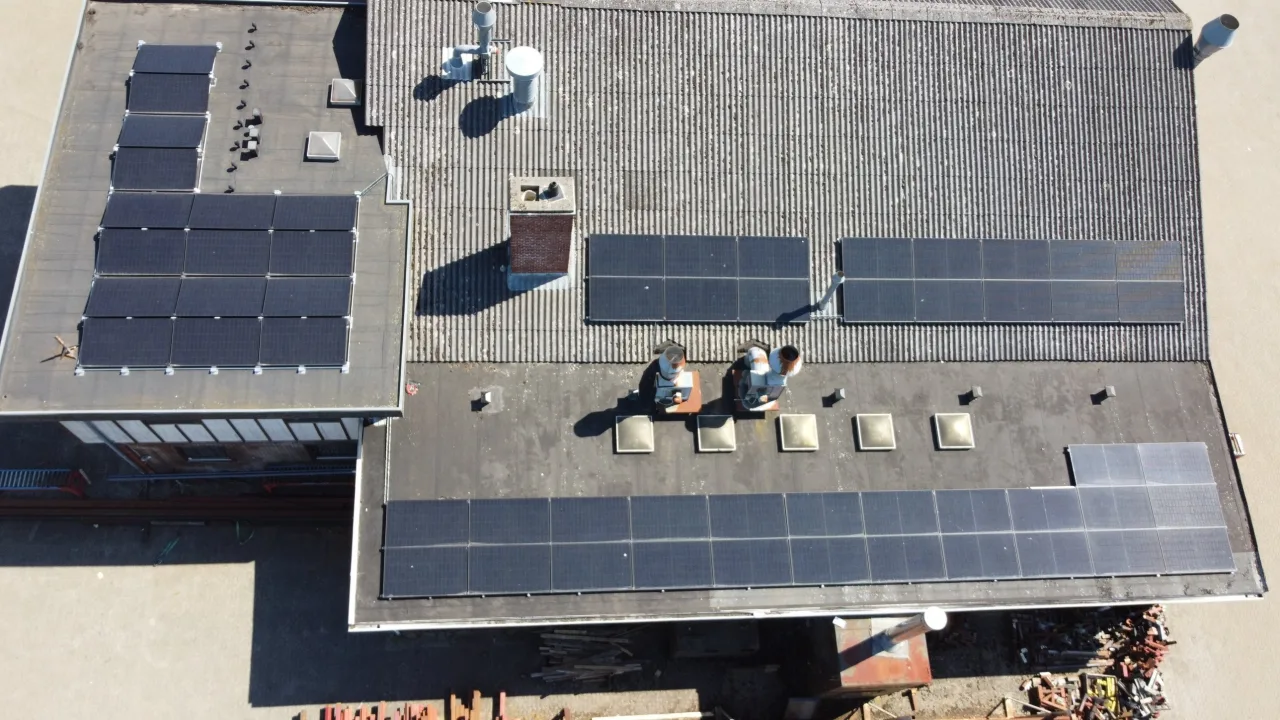
The flat-roof rows next to the arrays on the corrugated roof -
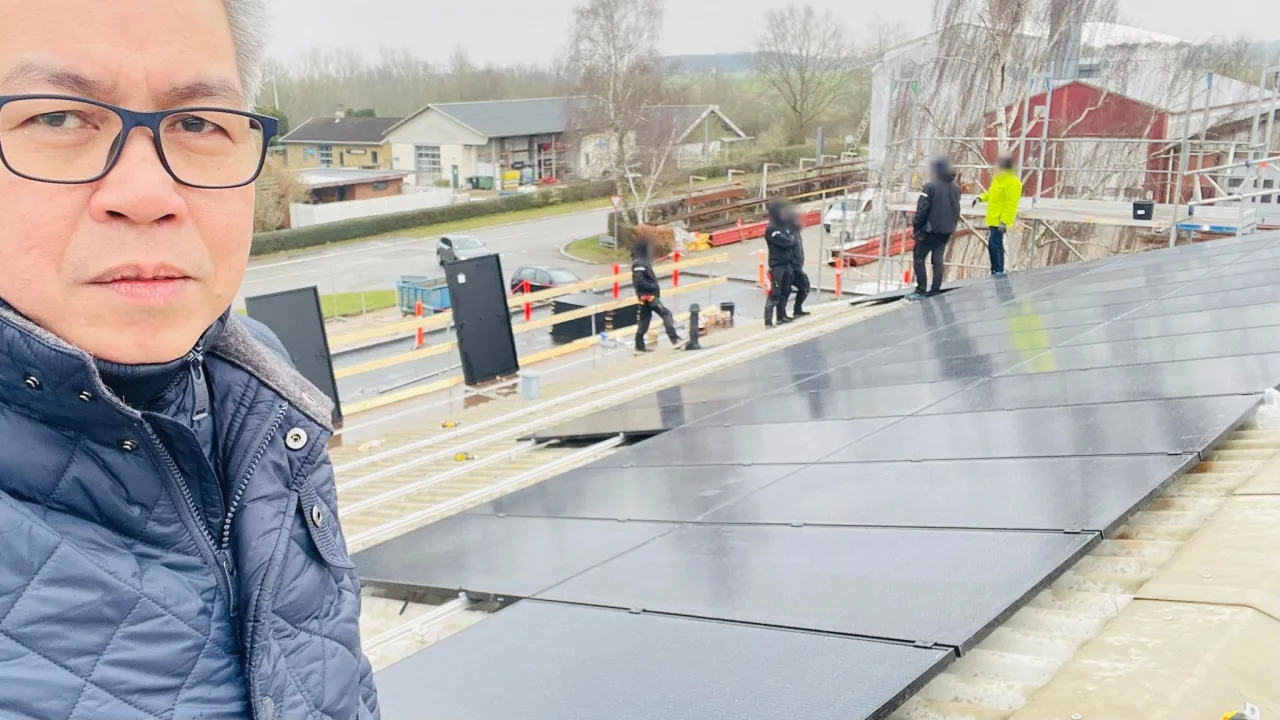
JF Legaspi on the roof during installation, with the crew mounting modules behind him
