
16kW Hybrid PV System - Residential, Tagaytay
- Type
- Residential
- Location
- Tagaytay, Cavite
- System size
- 13.92 kWp
- Scope
- Design, Supply, Installation & Commissioning
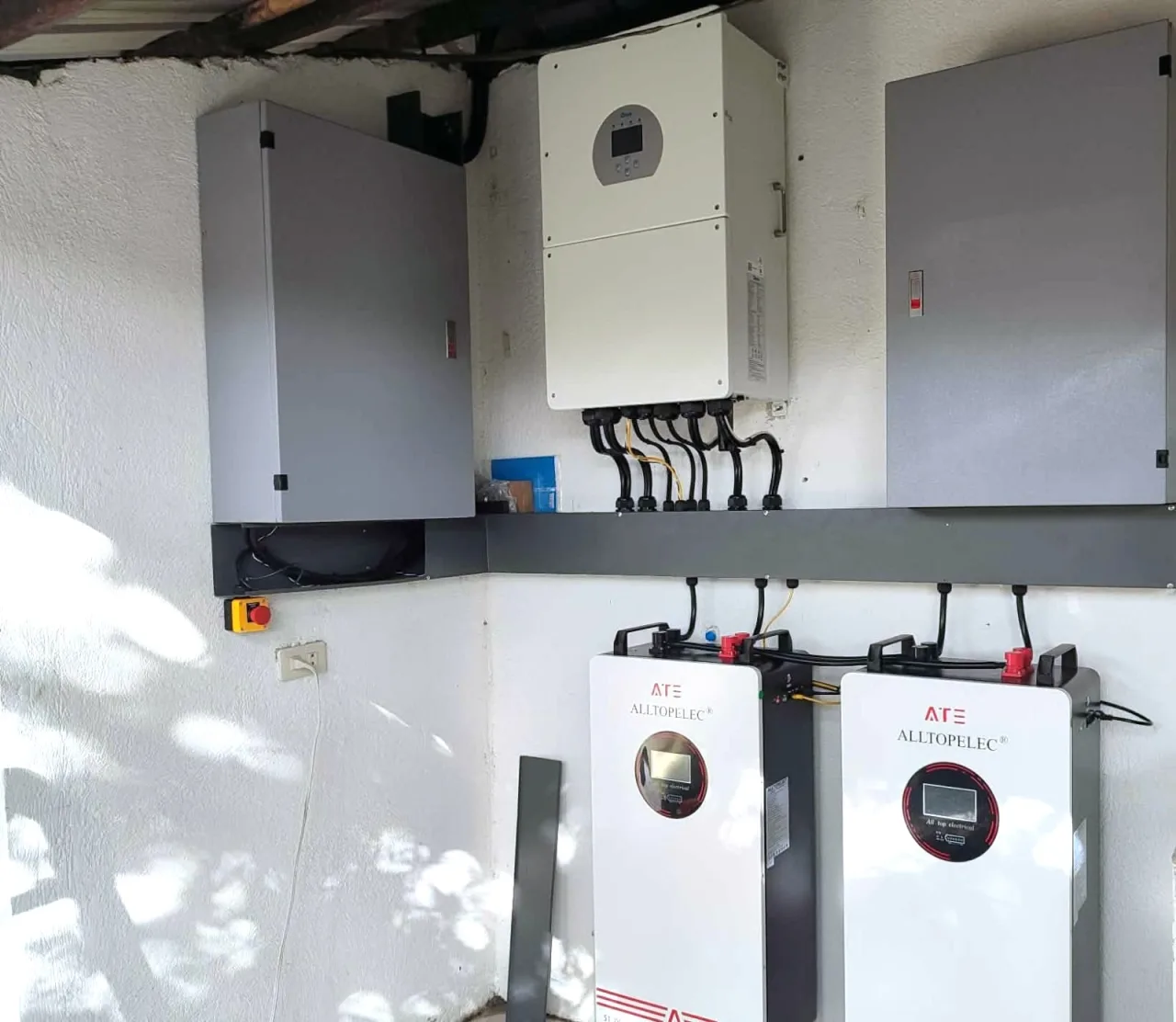
Tagaytay is where people go to slow down: cool air, a view of the hills, and quiet mornings with a cup of coffee. A rest house there is meant for exactly that. The last thing the owners want is a brownout spoiling the stay. JFL Solar & Renewables designed, supplied, installed and commissioned a 16 kW hybrid solar PV system with 32 kWh of battery storage, so the rest house has an uninterrupted power supply, day and night, for a peaceful and relaxing stay.
Why Solar Works Well in Tagaytay's Cool Weather
Solar panels like the sun, but they don't like heat. As a panel's cells get hotter, their voltage drops and so does the power they produce. In Tagaytay's cooler highland air, the cells run cooler than they would in the lowland heat, so each panel delivers more of its rated power. On cloudy days the array still produces, and the batteries carry the rest house through.
The Solar Array
24 AE 580W bifacial PV modules make up a 13.92 kWp solar array, mounted on aluminium rails across the rest house's tiled roof. Bifacial modules collect sunlight on both sides: direct sunlight on the front, and light reflected from the roof on the back.
The Hybrid Inverter
A Deye 16 kW hybrid inverter is the brain of the system. Every moment, it decides where the power goes: solar to the rest house first, the extra into the batteries, and the grid only when needed. With 16 kW of capacity, it has plenty of headroom for the rest house's loads while it charges the batteries at the same time.
Battery Storage
Two 51.2V 314Ah LiFePO4 (lithium iron phosphate) battery modules from JFL Solar, 16 kWh each, store 32 kWh of energy. LiFePO4 is the safest lithium battery chemistry for energy storage and lasts thousands of charge cycles. Each battery has its own display and battery management system (BMS) that protects the cells, and a communication cable to the inverter, so the inverter always knows how much energy is left.
A Dedicated Power Room
All the equipment sits in its own roofed power room beside the rest house, away from the living areas. Everything is wall-mounted in a tidy layout: the AC enclosure on the left, the inverter in the middle, the DC enclosure on the right, a common cable trunking that ties them together, and the two batteries below. An emergency stop button is mounted within easy reach, and the cables to the roof run in red conduit along the wall.
Protection Inside the Enclosures
- DC side: breakers and surge protection devices (SPD) for the PV strings, and DC moulded-case circuit breakers (MCCB) for the batteries.
- AC side: breakers, an AC surge protection device, and a 250 A automatic transfer switch (ATSE).
- The external automatic transfer switch keeps the rest house powered from the grid even if the inverter ever has to be switched off for maintenance.
Uninterrupted Power, Even in a Brownout
When the grid fails, the hybrid inverter automatically switches the backup loads to battery and solar power. The lights stay on and the rest house stays comfortable, so the owners and their guests can keep enjoying their stay. When the grid comes back, the inverter reconnects on its own.
How the System Works Every Day
- Daytime: solar power runs the rest house directly, and the surplus charges the batteries.
- Evening and night: the batteries take over with stored solar power.
- Brownouts: the batteries and solar keep the backup loads running.
Peace of Mind
Like every JFL Solar system, this one comes with our technical support: inverter and battery settings, monitoring questions and troubleshooting, so the owners can simply relax and enjoy the cool Tagaytay weather.
Photos
-

A dedicated, roofed power room beside the rest house, with the cables running up to the solar array in red conduit -

Everything wall-mounted and tidy, joined by a common cable trunking, with an emergency stop button within easy reach -

Wiring the Deye hybrid inverter: PV, battery, grid and backup connections -

Both enclosures and the inverter open during wiring, before the covers went back on -
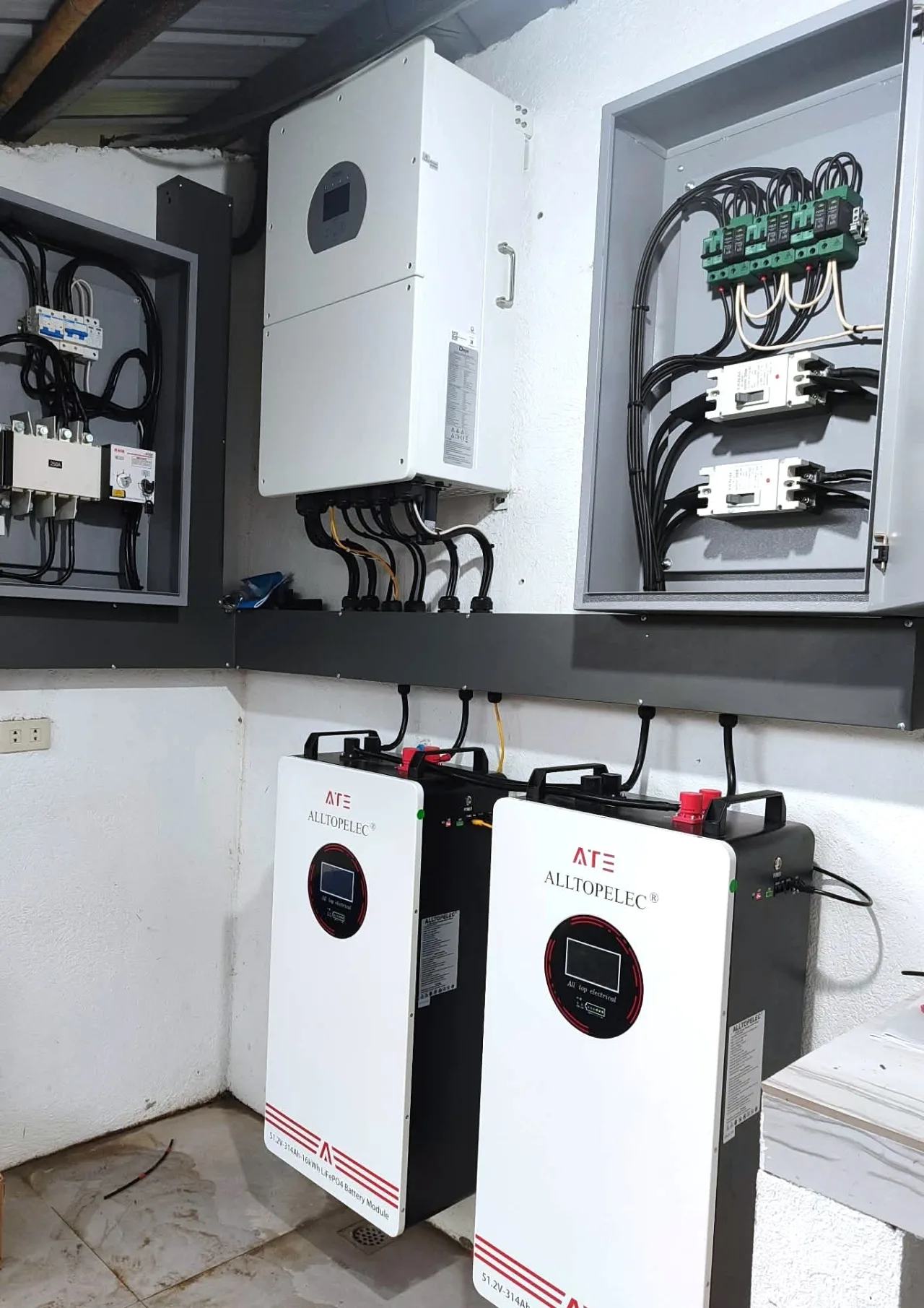
AC side on the left, DC side on the right -

The DC enclosure: PV breakers and surge protection devices (SPD) at the top, and DC moulded-case breakers for the batteries below, all neatly dressed and tied -

Mounting the AE 580W bifacial panels on the rest house roof as the sun goes down -

The 24 panels going onto the aluminium rails -

The team on the roof, with a view of the cool Tagaytay hills
