
8kW Hybrid PV System (AC Coupled) - Residential, Muntinlupa
- Type
- Residential
- Location
- Cupang, Muntinlupa
- System size
- 7.77 kWp
- Scope
- Design, Supply, Installation & Commissioning

Working from home sounds simple, until the power goes out. For this European couple, now living and working in the Philippines, home is also the office. He is a programmer, and his work keeps powerful computers running day and night, on jobs that cannot simply be paused when the grid fails. For them, a steady and reliable power supply is not a comfort. It is how they earn a living.
A solar PV system that didn't deliver
The couple already had a grid-tied solar PV system on their home, but they were far from happy with how it performed. On top of that, a grid-tied system has a built-in limitation: when the grid goes down, it shuts down too. This is a safety feature called anti-islanding, and it protects the line workers who repair the grid. So even with solar panels on the roof, every brownout left the house without power, the computers off and the work interrupted.
They wanted two things: a solar PV system that performs the way it should, and backup power during blackouts.
Found on YouTube
While looking for a solution, they came across JFL Solar on YouTube. They contacted us, and together we planned a system around what they needed: more solar power, battery storage and backup, without throwing away the PV system they had already paid for.
The solution: an AC-coupled hybrid solar PV system
We installed a new 8 kW hybrid solar PV system and AC coupled it with their existing grid-tied system, so the two now work together as one.
- Hybrid inverter: Luxpower 8 kW hybrid inverter
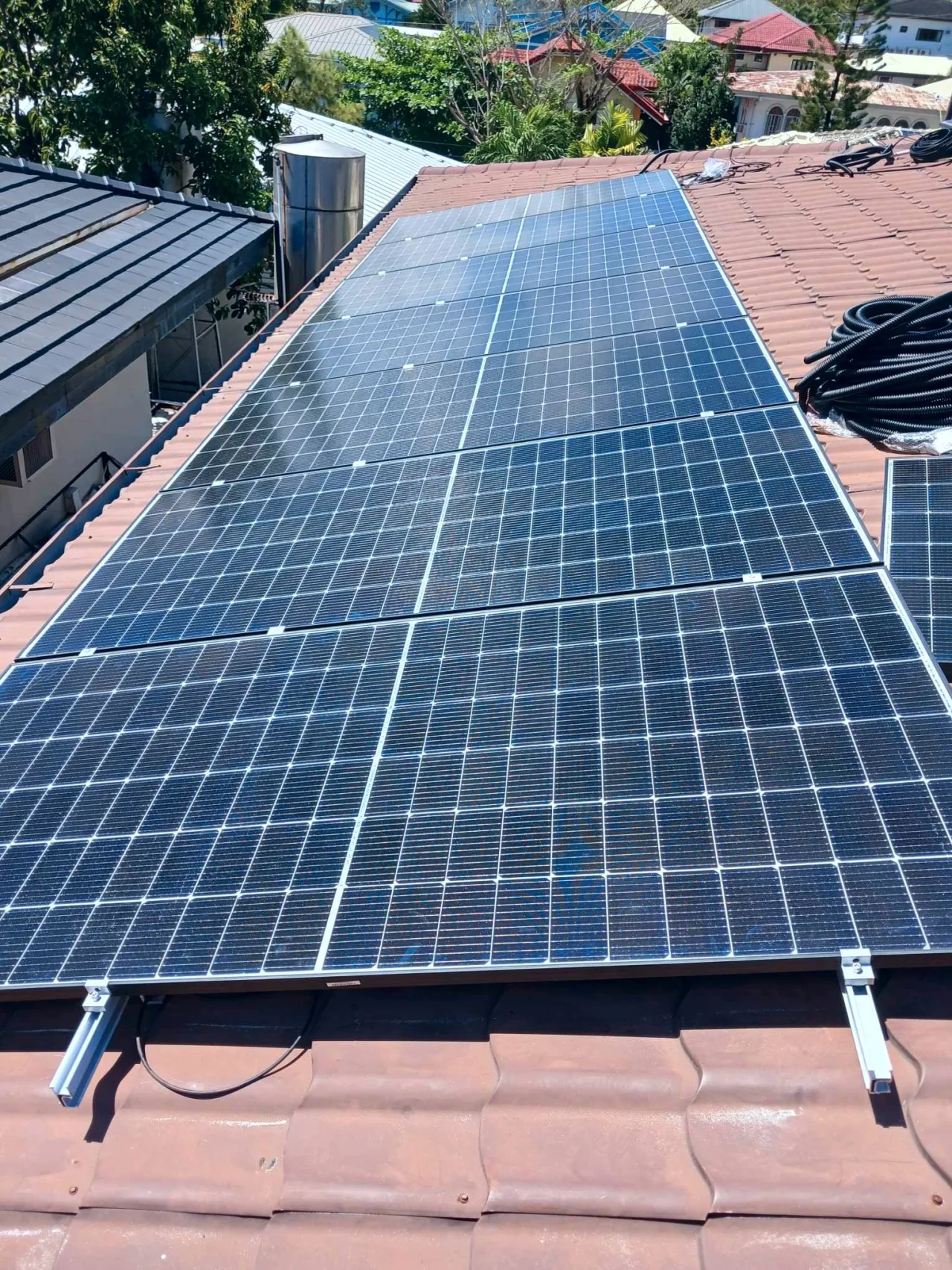
- New PV array: 14 × 555W solar panels, 7.77 kWp
- Battery storage: 3 × 314Ah JFL Solar LiFePO4 batteries (the couple started with one battery and later traded it in for these three)
- Existing system: their grid-tied PV system, kept in service and AC coupled to the new hybrid system
- Protection: DC isolators, an AC breaker box and a steel enclosure for the protection devices, all wall-mounted with a common cable trunking
From one battery to three
The couple started with a single battery. Once they were living with the system day to day, they traded in that first battery for three 314Ah JFL Solar LiFePO4 batteries. Three batteries mean much more stored solar energy: enough to carry the house and the computers through the evenings and through long brownouts.
What does "AC coupled" mean?
Solar equipment can be connected in two ways: on the DC side (the direct current that comes from the panels and the batteries) or on the AC side (the 230V alternating current that runs your appliances). In an AC-coupled setup, the existing grid-tied inverter keeps doing its job, turning the power of the old panels into AC, and that AC is tied into the new hybrid system. The hybrid inverter, with its own 14 panels and the batteries, manages the whole house.
The big advantage: the old investment is not wasted. The old panels keep producing, and the new hybrid system adds the solar capacity, the storage and the backup the couple were missing.
How it works, day and night
- Daytime: solar power runs the house and the computers first. Extra power charges the batteries.
- Evening and night: when the sun goes down, the batteries take over, so the house runs on stored solar energy instead of buying power from the grid.
- Blackouts: when the grid fails, the hybrid inverter switches the backup loads to battery and solar power in a fraction of a second. The computers stay on, and the work goes on.
Why LiFePO4 batteries
The three JFL Solar batteries use lithium iron phosphate (LiFePO4) cells, the safest lithium battery chemistry for homes. LiFePO4 is thermally stable, lasts thousands of charge cycles and keeps its capacity for many years. Each battery has a built-in battery management system (BMS) that protects and balances the cells, and a display that shows its state of charge at a glance.
A clean, serviceable installation
Everything is mounted on one wall: the new hybrid inverter beside the existing grid-tied inverter, the DC isolators and the AC breaker box below them, the steel enclosure for the protection devices on the side, and the three batteries underneath. The cables run in a common trunking, neat and protected, and every component is easy to reach for inspection and service.
Peace of mind while working from home
Today the couple's home runs on solar power from two systems working together. The batteries carry the evenings, and when the next brownout comes, the house keeps running and the work does not stop.
Do you already have a grid-tied solar PV system that isn't giving you the results you expected, or no power during brownouts? In many cases it can be upgraded with a hybrid inverter and batteries instead of being replaced. Call JFL Solar Sales at 0969 471 2098 and let's talk about your system.
Photos
-

From above: panel rows on several roof faces, with the cables laid out before they are routed in conduit -
The panels sit on aluminium rails above the clay tiles, with room underneath for air to cool them -
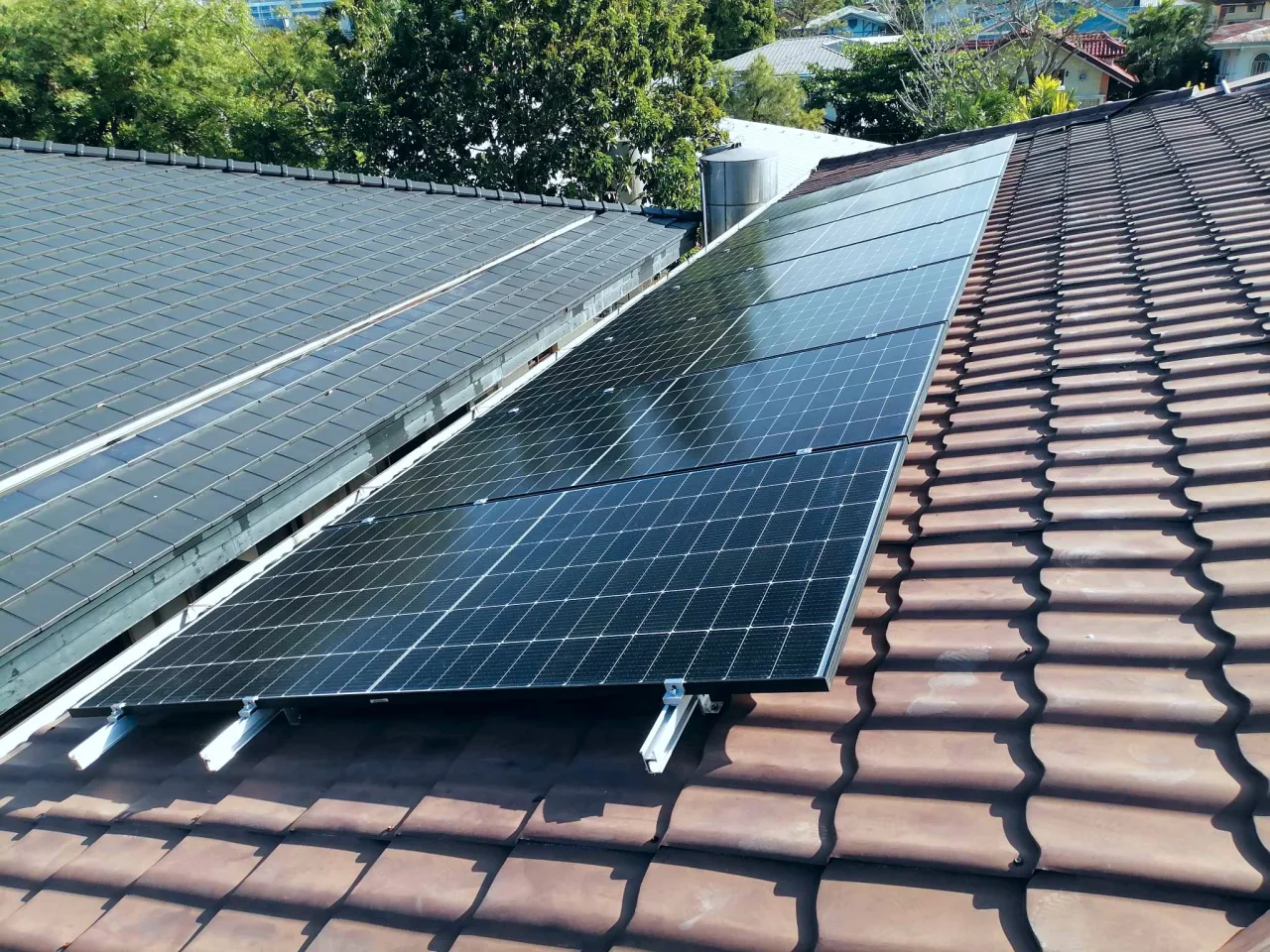
A long, straight row following the slope of the roof -
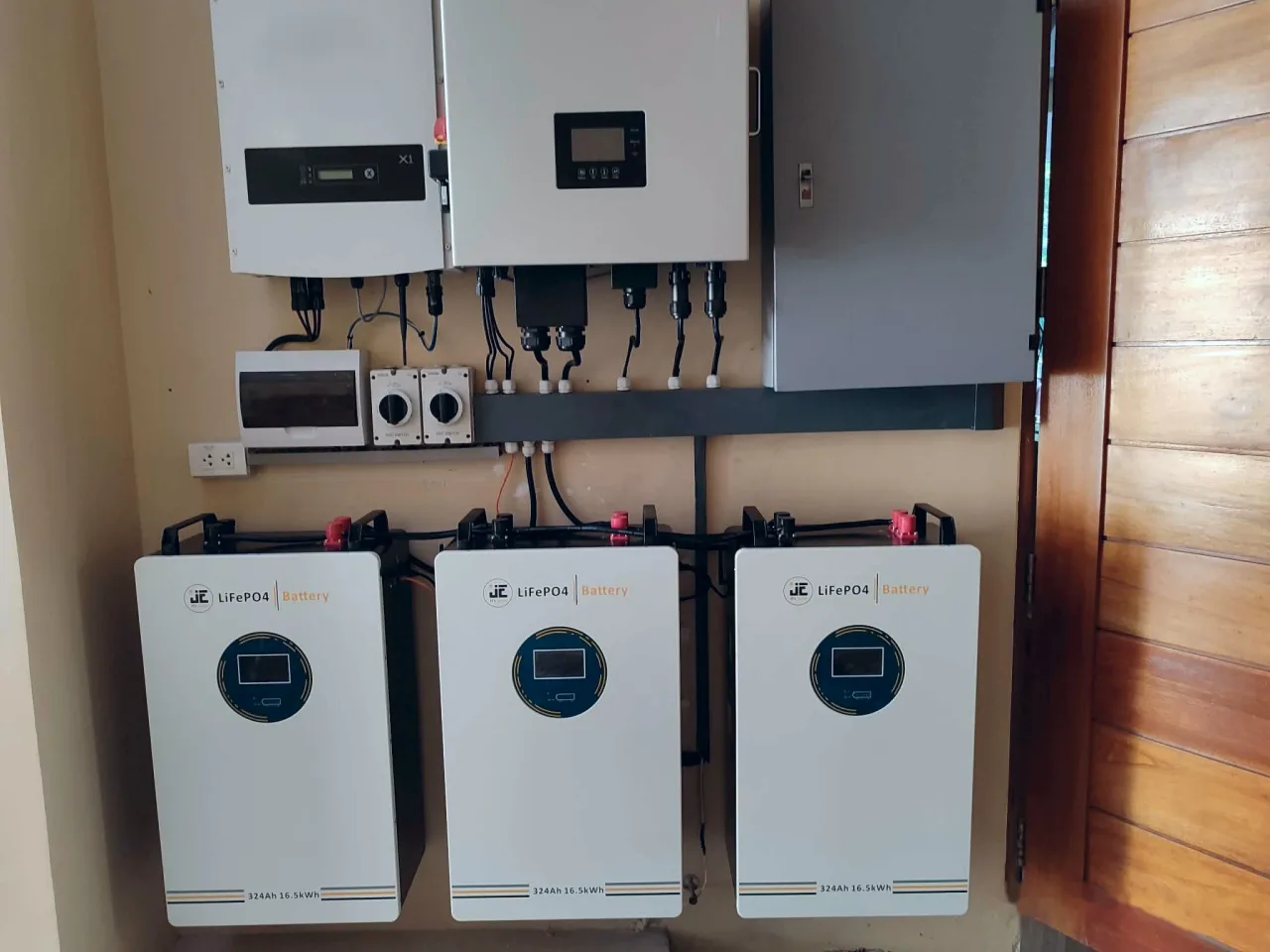
Old and new working together: the existing grid-tied inverter (left) AC coupled with the new Luxpower 8 kW hybrid inverter, and three JFL Solar LiFePO4 batteries below -
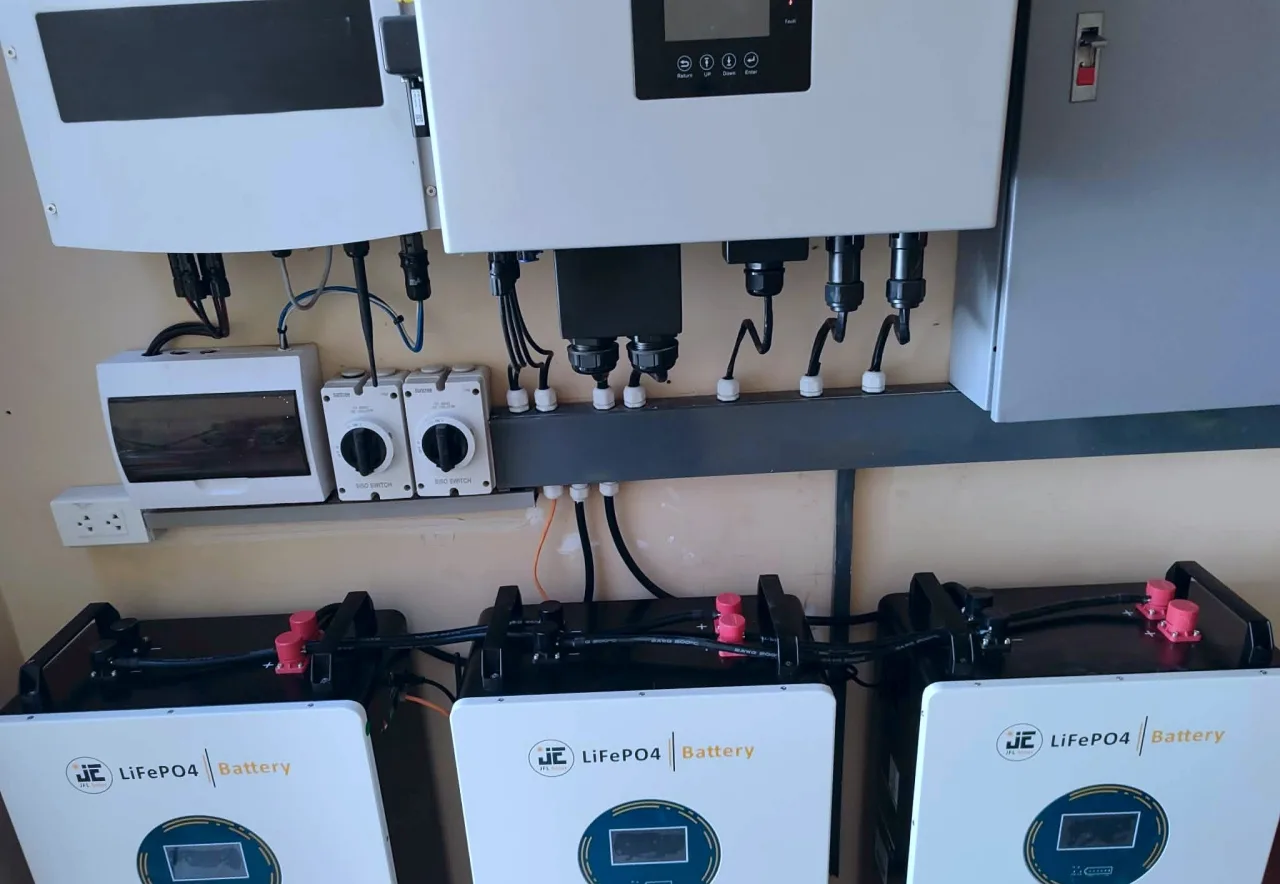
DC isolators and the AC breaker box above the three JFL Solar batteries, linked with heavy battery cables -

JF Legaspi with the new Luxpower 8 kW hybrid inverter
