
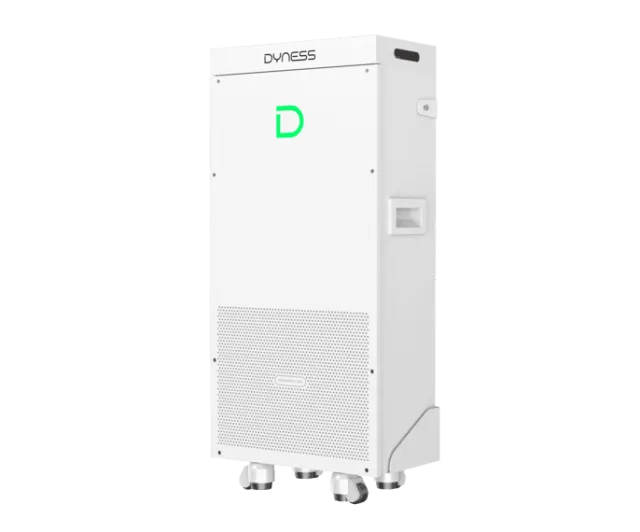
Brand guide

Dyness batteries
Who Dyness is, how its PowerBrick LiFePO4 home batteries compare, which inverters they work with, and how to install and size them.
Who is Dyness?
Dyness Digital Energy Technology Co., Ltd. is a Chinese maker of lithium battery storage, founded in August 2017. Its global headquarters opened in Suzhou in 2023, and it makes its own battery management systems (BMS), the electronics that protect and balance the cells.
Dyness focuses on batteries for homes and businesses and is one of the most widely used battery brands in Southeast Asia.
- Founded
- 2017headquarters in Suzhou, China
- Batteries shipped
- Over 1,000,000 unitsend of 2025
- Production
- 3 GWh a yearthree production centers (2025)
- Market position
- No. 3 in Asiahome battery shipments, InfoLink, first half of 2026
- Award
- EUPD Top Brand PV StorageSoutheast Asia, 2026
- Reach
- 100+ countries1,000+ staff, 240+ patents (2025)
What Dyness makes
Low-voltage home batteries (51.2 V)
The PowerBrick series we carry, plus the rack-style PowerBox and stackable STACK batteries, for 48 V hybrid and off-grid inverters.
High-voltage and all-in-one
The Tower Pro high-voltage battery and the Cygni all-in-one system (inverter and battery in one unit).
Commercial storage
Battery cabinets for businesses and factories, up to several megawatt-hours.
Dyness in the Philippines
- Dyness batteries are distributed in the Philippines by Photonergy Philippines Inc., its main distributor here.
- Dyness has a local team in the Philippines for pre-sales, order tracking and after-sales support.
- In May 2024 it held its “Light of Tomorrow” event at Conrad Manila together with Solis and JA Solar, and in May 2025 a Brand Day there with Solis and JA Solar, where the PowerBrick was shown.
- In August 2025 Solis toured the provinces (Calapan, Tuguegarao, Kalibo, Naga, Dumaguete and Ozamiz) demonstrating its hybrid inverter with Dyness batteries.
The PowerBrick batteries we carry
All four are 51.2 V lithium iron phosphate (LiFePO4) batteries with 95% usable depth of discharge, Wi-Fi monitoring through the Dyness app, and CAN/RS485 communication with the inverter.
| Model | Rated / usable | Max. charge & discharge | Cycle life | Protection | Weight | Extra |
|---|---|---|---|---|---|---|
| PowerBrick Max | 16.08 / 15.28 kWh | 200 A, 10.24 kW | 8,000+ | IP20 (indoor) | 116 kg | — |
| PowerBrick Plus | 16.08 / 15.28 kWh | 200 A, 10.24 kW | 8,000+ | IP65 (outdoor) | 117 kg | Outdoor-rated |
| PowerBrick SC | 16.08 / 15.28 kWh | 200 A, 10.24 kW | 8,000+ | IP20 (indoor) | 116 kg | Built-in display |
| PowerBrick Max20 | 20.07 / 19.07 kWh | 210 A, 10.75 kW | 10,000+ | IP20 (indoor) | 137 kg | Fire extinguisher built in |
Cycle life is Dyness’s test figure (8,000 cycles to 70% capacity for the 314 Ah models). One cycle a day for 20 years is about 7,300 cycles.
What this means for you
- About 15 kWh you can actually use from the 16 kWh models, enough for a typical home’s evening and night.
- Up to 10 kW of power, so the battery alone can run several aircons and a pump at once (the inverter sets the final limit).
- LiFePO4 safety: the safest common lithium chemistry for homes, very resistant to overheating.
Which PowerBrick is right for you?
- PowerBrick Max: the standard 16 kWh battery for indoor installation, such as a utility room or garage.
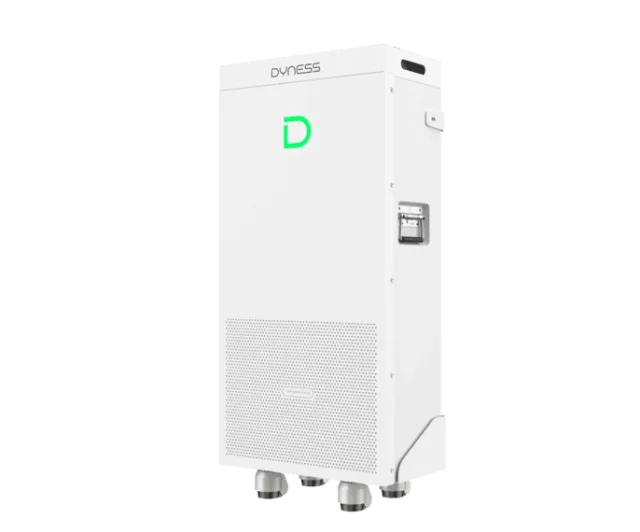
- PowerBrick Plus: the same capacity in an IP65 outdoor case, for when there is no indoor space. Still install it in the shade.
- PowerBrick SC: the Max with a built-in screen, so you can see the charge level without the app.
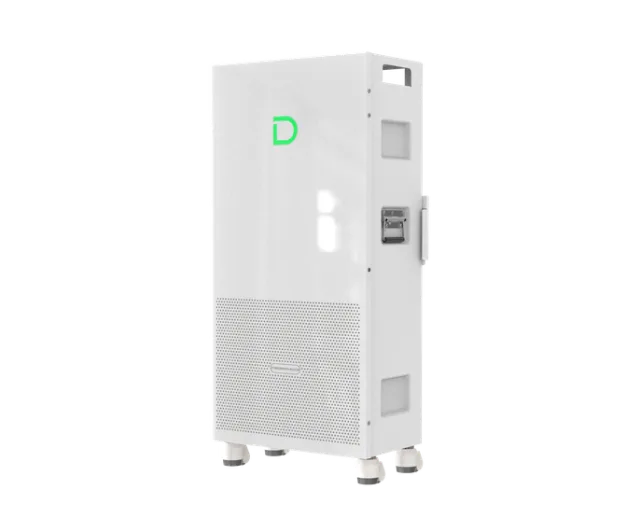
- PowerBrick Max20: 20 kWh in one unit for bigger homes or longer brownouts, with a built-in aerosol fire extinguisher.
These batteries weigh 116–137 kg, so they need a solid floor or wall, and a cool, dry, ventilated spot. Batteries last longest when kept away from heat.
Inverter compatibility
A lithium battery must “talk” to the hybrid inverter so the inverter knows its exact charge level and charges it safely. Dyness publishes a list of compatible inverters, which includes:
- GoodWe, including the ES-C10 8–12 kW hybrids and EO off-grid inverters (our GoodWe guide);
- Luxpower hybrid inverters (our Luxpower guide);
- Solis, and many other brands.
We check your exact inverter model against the current list and set the right protocol during commissioning.
How much battery do I need?
Add up the electricity you use from sunset to sunrise, plus a reserve for brownouts. As an example, a home that uses about 10 kWh at night fits one 16 kWh PowerBrick with room to spare; a home with aircon running all night may need the Max20 or two batteries in parallel. Our PV Calculator gives a first estimate, and we fine-tune it from your bill.
Warranty
- Dyness states a 10-year warranty for its PowerBrick batteries. The exact terms (such as the guaranteed capacity at the end of the warranty) are in the warranty document for your unit; ask us for a copy.
- We coordinate any warranty claim for you. See how warranty claims work.
Dyness products we sell
Prices and availability are kept up to date in our shop.
-
Batteries · Dyness
16kWh Outdoor LiFePO4 Battery (IP65)
PowerBrick Plus (314Ah)
Request price
Currently unavailable

Batteries · Dyness
16kWh LiFePO4 Battery with Display
PowerBrick SC (314Ah)
₱106,000
Currently unavailable
Batteries · Dyness
20kWh LiFePO4 Battery
PowerBrick Max20 (392Ah)
Request price
Currently unavailable
Common questions
Can I add a second battery later?
Yes. PowerBricks can be connected in parallel. Add the same model, and ideally within a few years so the batteries age similarly.
Dyness or Alltopelec?
Both make 51.2 V LiFePO4 batteries of about 16 kWh. Dyness is the bigger, longer-established brand with published compatibility lists and a local team; Alltopelec offers a slightly larger 16.5 kWh battery. See our Alltopelec guide.
Can I use it off-grid?
Yes, with an off-grid or hybrid inverter that supports 48 V lithium batteries.
Planning a solar PV system with Dyness?
Tell us your monthly bill and what you want on backup, and we’ll recommend the right inverter, panels, battery and protection.
Sources: Dyness, company profile, product pages for the PowerBrick Max, Plus, SC and Max20, compatible inverter list (2026), EUPD Top Brand (2026) and “Light of Tomorrow” in Manila (2024); InfoLink home battery ranking (pvtime, 2026); Power Philippines, Brand Day 2025 and Solis roadshow (2025). Last checked November 2026. Dyness is a trademark of its owner; JFL Solar is an independent seller.
